Now watch the following videos which deal with the specific Moral Panic involving the subject of "video nasties" - a panic that was continued by the James Bulger case:
Tuesday, 11 June 2013

Friday, 26 March 2010
Close-Reading Punctuation questions
Questions testing your knowledge of punctuation are almost always found in the General paper. Usually all the exam paper will want to know is why specific punctuation marks are being used in a passage. The easiest way of answering these questions is to learn what each of the main punctuation marks are used for. To help you I've created a punctuation glossary that you can download:
http://www.box.net/shared/bn3ge6tiv9
Learn what these common punctuation marks are used for and punctuation questions will be no problem at all.
http://www.box.net/shared/bn3ge6tiv9
Learn what these common punctuation marks are used for and punctuation questions will be no problem at all.
Want to be e-mailed/texted your exam results early?
If you want to know what grades you received a day before the official SQA exam certificates arrive then go to the following website and register with the SQA to receive your results early.
https://www.mysqa.org.uk/cs8/content/secure/my_homepage.jsp
This way you can celebrate even earlier...or it will give you time to come up with a good excuse to give your parents for your bad results when the actual exam certificate arrives! Here are some suggestions for excuses:

https://www.mysqa.org.uk/cs8/content/secure/my_homepage.jsp
This way you can celebrate even earlier...or it will give you time to come up with a good excuse to give your parents for your bad results when the actual exam certificate arrives! Here are some suggestions for excuses:
- During the exam a mutated seagull pecked its way through the exam-hall ceiling and shredded my exam paper.
- Immediately before my exam I was hypnotised by a disgruntled dwarf angry at the injustice of being short in a world full of tall-people.
- Moo?
- The questions were too easy so I rewrote them and the examiners must have been jealous of my intelligence.
- Some unknown villain swapped my pen for one filled with invisible ink.
Alternatively you could tell them the truth and admit that you just didn't revise enough!
Past Papers
If you want to look at some past papers to help you prepare for your exam then you can buy a past paper booklet from a good bookshop - or you can look at the free examples that the SQA has on it's website at:
http://www.sqa.org.uk/pastpapers/findpastpaper.htm?message=blank
Here you can find past papers for all of your subjects, not just English!
http://www.sqa.org.uk/pastpapers/findpastpaper.htm?message=blank
Here you can find past papers for all of your subjects, not just English!
Close Reading Skills 2 - Writer's Technique continued
Aside from alliteration and onomatopoeia the other two techniques you are likely to be asked about are metaphor and simile - the backbone of imagery.
Simile

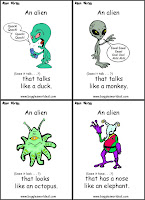
As with the previous writer's techniques in order to gain full marks in the credit exam you must not only name the technique but also say why it is effective. The easiest way of doing this is to use the (Just as…. is ….. so too is ……….) system. So 'bent double like old beggars' you would say this is a simile. just as an old beggar is hunched over so too are the soldiers. This gives us an image of the physical condition of the soldiers and shows us that the rigours of war have aged them.
The easiest way to find out if the technique is simile is to look out for AS or LIKE.
Simile
Simile is the technique used when you compare two things by saying that one is like the other. Examples: as brave as a lion, fat like a walrus, you are as dumb as a doorpost...

As with the previous writer's techniques in order to gain full marks in the credit exam you must not only name the technique but also say why it is effective. The easiest way of doing this is to use the (Just as…. is ….. so too is ……….) system. So 'bent double like old beggars' you would say this is a simile. just as an old beggar is hunched over so too are the soldiers. This gives us an image of the physical condition of the soldiers and shows us that the rigours of war have aged them.
The easiest way to find out if the technique is simile is to look out for AS or LIKE.
Metaphor
Metaphors are similar to similes but whereas a simile is coimparing something to something else by saying it's like the other thing a metaphor describes something by saying it IS the other thing.
A good way of explaining this is to look at some classic 80's cartoons!


In Bravestarr the main character is decribed as having: "eyes of a hawk, ears of a wolf, strength of a bear, speed of a puma". This is a metaphor as it is saying that his eyes are those of a hawk, they're not like a hawk's.
In Thundercats the metaphor is more visual - liono is a lion of a man, he's not like a lion he actually IS a lion.
BTW Thundercats rocks!
Close Reading Skill 1 - Writer's Technique/Figurative Language
One type of question that will most likely arise in your close reading exam paper is one that gives you a brief quote from the text and then asks you to identify the technique that the writer is using in the quote. These questions will likely be focusing on figurative language or imagery. Below you will find a list of the most commonly used techniques - learn how to identify these techniques and these types of questions will be a breeze!


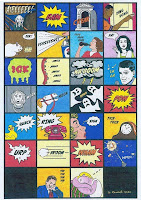
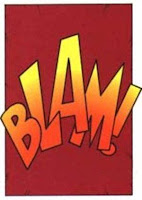
As with alliteration in order to get full marks you may have to explain why the onomatopoeiac word has been used - generally this will have something to do with the atmosphere of the text. If the onomtopoeiac word is a LOUD noise then it may indicate a scray/frightening/angry atmosphere wheras in contrast a quiet noise may indicate a hushed/eerie/sad atmosphere.
Alliteration
Alliteration is easy to spot - it's where consonant sounds are repeated at the beginning of two or more words that are close together (in the same sentence).
A good real-life (ahem) example of alliteration can be seen in the film 'V for Vendetta' where the main character V uses alliteration of the letter V:
"Voilà! In view, a humble vaudevillian veteran, cast vicariously as both victim and villain by the vicissitudes of Fate. This visage, no mere veneer of vanity, is it vestige of the vox populi, now vacant, vanished, as the once vital voice of the verisimilitude now venerates what they once vilified. ..etc."


Identifying the technique should be enough to get you full marks in the general paper - but if you want full marks in the credit paper you may have to explain why the technique is being used. This is a simple enough thing to do, just have a think about the sound of the consonant that is being repeated and the effect that it has. For example: 'Bill the Bomber' here the alliteration is on the letter 'B' and it is being used because the 'b' sound imitates the sound of falling bombs. Similarly 'the snake slithered slowly' the alliteration is on the 's' (although if you want to show that you're really smart then you'll point of that alliteration on the s sound is technically known as sibilance...) which is used to imitate the sound of the snake.
Onomatopoeia
This technique is when words sound like the word they describe, for example: snap, crackle, pop, hiss, bang, crash, shatter etc.
This is a technique used often in comic books - Batman is an especially big fan of the technique...


As with alliteration in order to get full marks you may have to explain why the onomatopoeiac word has been used - generally this will have something to do with the atmosphere of the text. If the onomtopoeiac word is a LOUD noise then it may indicate a scray/frightening/angry atmosphere wheras in contrast a quiet noise may indicate a hushed/eerie/sad atmosphere.
Thursday, 25 March 2010
Close Reading Paper
 You should already know all of this - but in case you don't (sleeping in class, kidnapped by leprachauns, selective amnesia brought on by wacthing the smurfs and eating a dodgy hotdog...) here is a brief guide to what to expect from the close-reading exam:
 First of all - Close Reading does not mean putting your face right next to the paper to read it...
It means reading the text closely in order to fully:
Understand what the passage is about.
Analyse how the passage is written.
Evaluate what you think of the passage and how it is written.
You will sit two 50 minute papers - Foundation & General OR General & Credit.
You will be given a short extract of text to read (2 A4 sides long) and then asked 25 questions on this extract - each question being worth 2 marks.
To help you the SQA will have told you in bold lettering before the question which paragraphs you will find the answer in. So the sensible thing to do is read the passage as a whole once and then reread the paragraphs that are relevant to the question you are answering. The SQA isn't trying to trick you - you will find the answer in the paragraphs that they say you will find it in.
Tuesday, 23 March 2010
The basics of tackling your reading exam...
How do you get a good grade in the your Standard Grade English reading exam? Well a good start would be to READ!
One of the best methods of revising for your exam is to read good literature (so chuck the Stephen King in the bin - a good storyteller does not a good writer make!). It is also vitally important to read the questions in the exam paper - and when I say read I mean READ, not skim or glance at, or peruse, or "get the gist of" but READ fully, completely, 100%.

Do not fear reading - if you read your brain will not explode (trust me). In fact, if you read enough, then maybe someday you will know as many random pieces of information as me...
One of the best methods of revising for your exam is to read good literature (so chuck the Stephen King in the bin - a good storyteller does not a good writer make!). It is also vitally important to read the questions in the exam paper - and when I say read I mean READ, not skim or glance at, or peruse, or "get the gist of" but READ fully, completely, 100%.
Do not fear reading - if you read your brain will not explode (trust me). In fact, if you read enough, then maybe someday you will know as many random pieces of information as me...
Wednesday, 17 March 2010
Standard Grade Revision
One of the greatest myths to make its way around exam candidates in schools is:
"You can't revise for English exams!"
WRONG! You can revise for English exams. As with anything in life "Proper preparation prevents poor performance".
Unless you're in the habit of creating Standard Grade level exam papers in your spare-time then you need to revise to make sure you're 100% certain on the types of questions that you can be asked and the ways in which you should answer these questions.
Below you will find links to some websites that will help you prepare for your exams:
http://www.mediamatters.co.uk/SouthLanEnglish/
http://www.kilmarnockacademy.co.uk/pupilenglish1of10.htm
https://www.bbc.co.uk/scotland/learning/bitesize/standard/english/
I'll be going over some of the information in class as well as going over some example questions with you - so pay attention! Another easy way of improving your close-reading and writing skills is to READ books at home.
"You can't revise for English exams!"
WRONG! You can revise for English exams. As with anything in life "Proper preparation prevents poor performance".
Unless you're in the habit of creating Standard Grade level exam papers in your spare-time then you need to revise to make sure you're 100% certain on the types of questions that you can be asked and the ways in which you should answer these questions.
Below you will find links to some websites that will help you prepare for your exams:
http://www.mediamatters.co.uk/SouthLanEnglish/
http://www.kilmarnockacademy.co.uk/pupilenglish1of10.htm
https://www.bbc.co.uk/scotland/learning/bitesize/standard/english/
I'll be going over some of the information in class as well as going over some example questions with you - so pay attention! Another easy way of improving your close-reading and writing skills is to READ books at home.
Thursday, 11 March 2010
Twilight Essay
You should all have viewed the Powerpoint I prepared on cinematic techniques used in Twilight. Here's a brief summary to help you when typing up your essays:
Car-Park Scene: Hardwicke uses a close-up reaction shot of Bella's face. What does this shot show? What does Bella's reaction to Edward tell us about him? I she surprised/shocked at Edward's speed and strength? Does this possibly hint that he may be hiding something?
Car scene: Hardwicke uses a sound effect in this scene when Bella reaches to turn off the car heating and accidently touches Edward's hand. Is this sound effect diagetic (created by something in the shot) or non-diegetic (added in editing for the audience's benefit)? What is the purpose in this sound effect? Does it tell us something about what Bella is feeling when she realise Edward's hands are ice-cold? Does this hint that Edward has a secret/is hiding something?
Computer scene: Flashbacks are used in this scene when Bella is researching "The Cold Ones". Whenever Bella sees a keyword such as 'speed' she remembers an event she has witnessed with Edward in which he exhibited this trait. The technique Hardwicke uses here is known as subjective flashbacks. What do these flashbacks reveal about Edward?
Meadow scene: Lighting. Prior to this scene the whole film is bathed in a blue light - like a blue filter has been placed over the camera lens - but in the meadow scene, once Edward has finally admitted his secret to Bella, this blue light is absent. What atmosphere does the blue light create in the film? Does it give the impression of something being hidden? Does the fact that the story is told from Bella's perspective show that something is being hidden from Bella?
The sudden lifting of this blue light in the meadow scene is symbolic of the veil being lifted from Bella's eyes - she finally knows Edward's secret and his true vampiric nature is no longer hidden.
Now you tell me how Hardwicke makes use of special effects in the scene immediately before the meadow scene to reveal that Edward is a vampire.
Car-Park Scene: Hardwicke uses a close-up reaction shot of Bella's face. What does this shot show? What does Bella's reaction to Edward tell us about him? I she surprised/shocked at Edward's speed and strength? Does this possibly hint that he may be hiding something?
Car scene: Hardwicke uses a sound effect in this scene when Bella reaches to turn off the car heating and accidently touches Edward's hand. Is this sound effect diagetic (created by something in the shot) or non-diegetic (added in editing for the audience's benefit)? What is the purpose in this sound effect? Does it tell us something about what Bella is feeling when she realise Edward's hands are ice-cold? Does this hint that Edward has a secret/is hiding something?
Computer scene: Flashbacks are used in this scene when Bella is researching "The Cold Ones". Whenever Bella sees a keyword such as 'speed' she remembers an event she has witnessed with Edward in which he exhibited this trait. The technique Hardwicke uses here is known as subjective flashbacks. What do these flashbacks reveal about Edward?
Meadow scene: Lighting. Prior to this scene the whole film is bathed in a blue light - like a blue filter has been placed over the camera lens - but in the meadow scene, once Edward has finally admitted his secret to Bella, this blue light is absent. What atmosphere does the blue light create in the film? Does it give the impression of something being hidden? Does the fact that the story is told from Bella's perspective show that something is being hidden from Bella?
The sudden lifting of this blue light in the meadow scene is symbolic of the veil being lifted from Bella's eyes - she finally knows Edward's secret and his true vampiric nature is no longer hidden.
Now you tell me how Hardwicke makes use of special effects in the scene immediately before the meadow scene to reveal that Edward is a vampire.
Wednesday, 10 March 2010
Twilight Essay
For your final piece of written work for your Standard Grade folio you will be writing a critical evaluation of the film 'Twilight' directed by Catherine Hardwicke. Your question will be:
"In the film 'Twilight' directed by Catherine Hardwicke, one of the main characters has a secret. Explain what this secret is and show how this secret is revealed throughout the film. You should refer to media techniques such as: key scene, camera shots, flashback, lighting, sound, etc."
"In the film 'Twilight' directed by Catherine Hardwicke, one of the main characters has a secret. Explain what this secret is and show how this secret is revealed throughout the film. You should refer to media techniques such as: key scene, camera shots, flashback, lighting, sound, etc."

Tuesday, 23 February 2010

Tuesday, 10 November 2009
Prejudice in Scotland
Prejudice:
"Literally means to ' pre-judge '. That is to form an opinion before knowing the facts of a situation.Ignorance is a factor in causing prejudice. Prejudice, like the word 'bias' can be either negative or positive. It is possible to be prejudiced in favour of someone or prejudiced against someone".
To help you research for your essays and speeches I've found some sites that might provide you with some useful information (F and S in AFOREST possibly...):
General Prejudice in Scotland
http://www.equalityhumanrights.com/en/newsandcomment/Pages/Noplaceforprejudice.aspx
http://www.scotland.gov.uk/Publications/2003/09/18318/27582
http://news.bbc.co.uk/1/hi/scotland/7138538.stm
http://www.scotland.gov.uk/Resource/Doc/205750/0054713.pdf
http://news.bbc.co.uk/1/hi/scotland/3151062.stm
Homophobia
http://www.scotland.gov.uk/Publications/2008/02/19133153/3
Travellers
http://www.journalonline.co.uk/Extras/1005097.aspx
http://scotland.shelter.org.uk/getadvice/advice_topics/finding_a_place_to_live/gypsiestravellers/about_gypsiestravellers
http://www.comelookatus.org/
http://www.time-travellers.org.uk/
http://www.gypsy-traveller.org/cyberpilots/Projects/scotland_newspaper.htm
http://www.highland.gov.uk/NR/rdonlyres/3B481DEC-2D81-4EB3-90C9-83B58177E90C/0/Item6VAL408.pdf
http://www.scottishtravellered.net/
http://www.scolag.org/journal/articles/2008_SCOLAG_66-67.pdf
http://news.bbc.co.uk/1/hi/scotland/6427391.stm
Anti-Polish
http://news.scotsman.com/tacklingracisminscotland/Rise-in-race-crimes-linked.3299508.jp
http://news.bbc.co.uk/1/hi/magazine/7316261.stm
"Literally means to ' pre-judge '. That is to form an opinion before knowing the facts of a situation.Ignorance is a factor in causing prejudice. Prejudice, like the word 'bias' can be either negative or positive. It is possible to be prejudiced in favour of someone or prejudiced against someone".
To help you research for your essays and speeches I've found some sites that might provide you with some useful information (F and S in AFOREST possibly...):
General Prejudice in Scotland
http://www.equalityhumanrights.com/en/newsandcomment/Pages/Noplaceforprejudice.aspx
http://www.scotland.gov.uk/Publications/2003/09/18318/27582
http://news.bbc.co.uk/1/hi/scotland/7138538.stm
http://www.scotland.gov.uk/Resource/Doc/205750/0054713.pdf
http://news.bbc.co.uk/1/hi/scotland/3151062.stm
Homophobia
http://www.scotland.gov.uk/Publications/2008/02/19133153/3
Travellers
http://www.journalonline.co.uk/Extras/1005097.aspx
http://scotland.shelter.org.uk/getadvice/advice_topics/finding_a_place_to_live/gypsiestravellers/about_gypsiestravellers
http://www.comelookatus.org/
http://www.time-travellers.org.uk/
http://www.gypsy-traveller.org/cyberpilots/Projects/scotland_newspaper.htm
http://www.highland.gov.uk/NR/rdonlyres/3B481DEC-2D81-4EB3-90C9-83B58177E90C/0/Item6VAL408.pdf
http://www.scottishtravellered.net/
http://www.scolag.org/journal/articles/2008_SCOLAG_66-67.pdf
http://news.bbc.co.uk/1/hi/scotland/6427391.stm
Anti-Polish
http://news.scotsman.com/tacklingracisminscotland/Rise-in-race-crimes-linked.3299508.jp
http://news.bbc.co.uk/1/hi/magazine/7316261.stm
Monday, 9 November 2009
Churchill and "A Few Good Men"
Continuation 0f AFOREST HERO (and by that I don't mean the thieving Robin Hood!).
We continued to look at some of the all-time great speeches - Independence Day "Good morning..." and Colonel Jessep's "You can't handle the truth!". You've learnt about some effective oratorical techniques and you've seen them in practice - now it's time to think about putting these techniques into practice when we write persuasive pieces.
We continued to look at some of the all-time great speeches - Independence Day "Good morning..." and Colonel Jessep's "You can't handle the truth!". You've learnt about some effective oratorical techniques and you've seen them in practice - now it's time to think about putting these techniques into practice when we write persuasive pieces.
Friday, 6 November 2009
MLK - questions...
So... today we looked at some questions on MLK's famous "I Have a Dream" speech. From the last 2 lessons you should have discovered that MLK's speech is rife with metaphors. Metaphors are a type of literary technique known as "imagery" - which means.....?

It helps us (the reader) create a picture of what is being written/talked about in our minds.
So - for example - the metaphor filled line:
"One hundred years later, the life of the Negro is still sadly crippled by the manacles of segregation and the chains of discrimination"
This evokes an image in the audience's mind of a black-man chained up, of the black-man as a slave. From this use of metaphor MLK vividly shows us the lot of the black-man in 1960s America. Although they are technically free-men, in reality they are still treated as slaves shackled not with chains and manacles of iron but by means of segregation (Jim Crow laws) and discrimination. They may not be physically chained anymore, but the white-man's laws and racist attitude towards the Negro population ensure that they are still not granted the privileges of the free-man.
Next lesson we will finish off the questions and then get started on understanding the purpose of speeches and persuasive writing before moving on to look at some specific rhetorical techniques used by speech writers.
Thursday, 5 November 2009
"I Have a Dream...."
Here you go - the moving and powerful speech by Martin Luther King Jr. (the man with the excessively long name):
Martin Luther King's America

To start with on your prejudice unit you will be focusing mainly on MLK's famous "I Have a Dream" speech - but before we have a look at the speech it's important that we have an understanding of the America in which MLK lived.
Freedom, democracy and equality for all...? The (in)famous rallying cries of the United States of America - the land of the free. Yet were these ideals of the "American Dream" actually actively practised in MLK's USA? No.
MLK lived in an America rife with racism, where the black man and the white man lived completely seperate lives. He lived in a USA that actively encouraged segregation of the races so that black-people and white-people were effectively banned from sharing:
- Bus station waiting rooms and ticket windows
- Railroad cars
- Restaurants
- Schools and public parks
- Toilets
- Swimming pools
- Cemeteries
- Drinking fountains

They also suffered from something called disenfranchisement in the Southern States - rules that were put in place to make it extremely difficult for black people to exercise their democratic right.
Wednesday, 30 September 2009
Poetic techniques
Before tackling 'Dulce et decorum est' it is important that you have an understanding of the main poetic techniques that Owen uses in the poem. These being: metaphor and simile.
Below you will find a link to the poetic terms handout that you were given:
http://www.box.net/shared/rr4y43z3b0
In order to fully understand these terms in practice we had a look at that most prevalent form of poetry around in society today- song.
First of all we examined "Pretty like drugs" by the excellent band Queen Adreena:
"Pretty Like Drugs" - Queen Adreena
Before listening to the song and looking at the song lyrics I showed you a montage video that I had created on the subject of drugs, showing both sides of drug-taking: good and bad. We then discussed the simile in the song 'pretty like drugs' - we know that it is a simile since something is being described by comparing it to something else and saying that it is similar to it. In this case:
What was being described? the singer
What was it being compared to? drugs
What effect does this have/what does it tell us about the thing? It tells us that the singer is addictive and enthralling just like drugs are - that she has a certain attraction to her. However, it also tells us that she is dangerous, just like drugs are dangerous, that just as drugs destroy things so too does she.
We then went on to examine the use of metaphor in song. The first song being "Bullet with butterfly wings" by the Smashing Pumpkins:
"Bullet With Butterfly Wings" - Smashing Pumpkins
The first metaphor in the song is "The world is a vampire". We know that this is a metaphor as it compares two things by saying that the first thing is the second thing.
What is being described? The world
What is it being compared to? A vampire
What is the effect/what does it tell us about the thing? That the world sucks life from things, that it is draining.
The other metaphor in the song is "despite all my rage I am still just a rat in a cage". Can you analyse this metaphor for yourself? Use the formula above.
Have a look at this song "Butterfly" by Crazy Town.
"Butterfly" - Crazy Town
Can you find and explain the metaphor in this song?
Below you will find a link to the poetic terms handout that you were given:
http://www.box.net/shared/rr4y43z3b0
In order to fully understand these terms in practice we had a look at that most prevalent form of poetry around in society today- song.
First of all we examined "Pretty like drugs" by the excellent band Queen Adreena:
"Pretty Like Drugs" - Queen Adreena
Before listening to the song and looking at the song lyrics I showed you a montage video that I had created on the subject of drugs, showing both sides of drug-taking: good and bad. We then discussed the simile in the song 'pretty like drugs' - we know that it is a simile since something is being described by comparing it to something else and saying that it is similar to it. In this case:
What was being described? the singer
What was it being compared to? drugs
What effect does this have/what does it tell us about the thing? It tells us that the singer is addictive and enthralling just like drugs are - that she has a certain attraction to her. However, it also tells us that she is dangerous, just like drugs are dangerous, that just as drugs destroy things so too does she.
We then went on to examine the use of metaphor in song. The first song being "Bullet with butterfly wings" by the Smashing Pumpkins:
"Bullet With Butterfly Wings" - Smashing Pumpkins
The first metaphor in the song is "The world is a vampire". We know that this is a metaphor as it compares two things by saying that the first thing is the second thing.
What is being described? The world
What is it being compared to? A vampire
What is the effect/what does it tell us about the thing? That the world sucks life from things, that it is draining.
The other metaphor in the song is "despite all my rage I am still just a rat in a cage". Can you analyse this metaphor for yourself? Use the formula above.
Have a look at this song "Butterfly" by Crazy Town.
"Butterfly" - Crazy Town
Can you find and explain the metaphor in this song?
WWI Poetry
You're now experts on life at the Front in World War 1 - you've written an imaginative journal from the point of view of a junior officer serving at the Western Front. Now we shall focus on a poem written by a poet who actually fought during WWI - Wilfred Owen's 'Dulce et decorum est'.
This lesson I gave you a little bit of information about Wilfred Owen:
This lesson I gave you a little bit of information about Wilfred Owen:
- Wilfred Owen 1893-1918
- He wanted to make ordinary civilians back home understand the realities of trench-warfare. He wrote about the horrors faced by soldiers fighting in the war.
- He did not want to write about the honour and glory of fighting for one's country, the truth of the war for him was in the suffering of the soldiers and his pity for them.
- In a letter he wrote “My subject is war and the pity of war”.
- He was killed in action during a dawn attack on 4/11/1918 - just one week before the end of the war.
I also told you a little bit about the poem "Dulce et decorum est", explaining that the title refers to a poem written by the Roman poet Horace that was published in about 23BCE. The last lines of the poem are:
"The old Lie: Dulce et decorum est
Pro patria mori"
Translated from the Latin these lines mean 'How sweet and fitting it is to die for one's country'.

As you can see from this image of the original manuscript the poem is dedicated to 'Jessie Pope etc.' - Jessie Pope being the name of a famous propagandist at the time who was ardent in her support of the war and who fervently urged men to join up and fight. This dedication is ironic since Owen himself disagreed with Pope's beliefs.
For Owen it was important that the"old lie" that it was good to die fighting for your country ha to be destroyed. He believed that civilians had to be told of the realities of war, that it was a dirty and painful business and that rather than being "glorious" death in battle was actually horrific and painful. In "Dulce et decorum est" he uses graphic imagery to convey the realities of war to his readers back home who would have been encouraging their sons/husbands/brothers to join up and fight.
Tuesday, 22 September 2009
World War 1 - Journal
For the first part of our unit on World War 1 you are tasked with writing a war journal from the perspective of a junior officer fighting in the trenches. Put yourself in the shoes of an officer fighting at the front during WWI and in the journal describe your thoughts and feelings on certain subjects - using varied descriptive language to describe the reality of life at the front.
Below you will find some information to help you understand what life was like in the trenches during WWI:
http://www.slideshare.net/dmcdowell/a-soldiers-life
http://www.bbc.co.uk/history/worldwars/wwone/
http://www.bbc.co.uk/schools/worldwarone/
http://www.firstworldwar.com/features/trenchlife.htm
http://www.historylearningsite.co.uk/memories_from_the_trenches.htm
Below you will find some information to help you understand what life was like in the trenches during WWI:
http://www.slideshare.net/dmcdowell/a-soldiers-life
http://www.bbc.co.uk/history/worldwars/wwone/
http://www.bbc.co.uk/schools/worldwarone/
http://www.firstworldwar.com/features/trenchlife.htm
http://www.historylearningsite.co.uk/memories_from_the_trenches.htm
Subscribe to:
Posts (Atom)
